

Calculating CO2 emissions for the home
We calculated how much green house gas our energy consumption emits and how far we would have to drive in a petrol car to emit the same levels. Its a lot!

Sam Bendat
Updated: August 20, 2024
This week I'm gonna dig into the carbon emissions of a simple energy customer by looking at one megawatt of energy. For reference, a standard Aussie home consumes around 6.2 megawatts per year.
If you want to figure out your rough megawatt usage per year just multiply your average daily energy usage (from your latest bill) by 365, then divide by 1000.
Energy usage and the provider
There are two key factors that go into calculating a rough estimate of CO2e (Carbon dioxide equivalent emission) for a residential home.
One is the obvious, how much energy you use, the second is the slightly less obvious, which energy provider you are with.
Calculating a baseline of emissions for everyone
Some quick info, 90% of Australians live inside the National Electricity Market (NEM), which extends from Hobart to Cairns, from Adelaide to Sydney, and everywhere in between. It's a giant puzzle of wires and power plants we all live inside.
One plus side of the giant puzzle is a lot of data is publicly available.
For example, in the NEM on average one megawatt of energy produces 610kgs of CO2e. For comparison, a standard passenger petrol car produces around 146.5 grams of CO2 per kilometre.
With a little math that works out to:
One megawatt of energy is the same as driving a car for 4,163 kilometres.
Road trip anyone? Its about the same as driving from Sydney to Perth, and some.
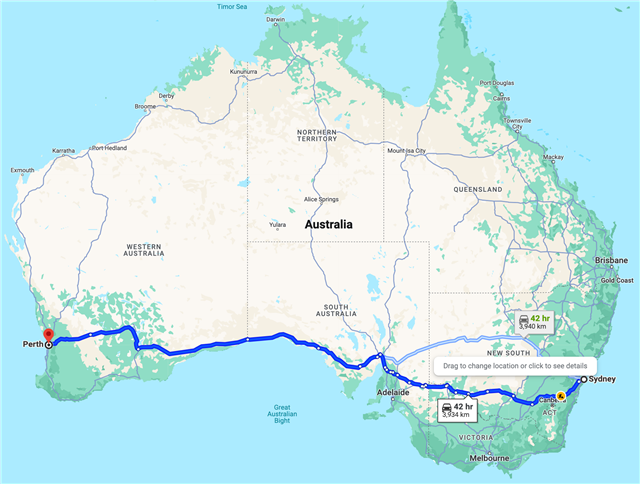
But no single home consumes just one megawatt per year, like I mentioned before the average house consumes around 6.2 megawatts per year.
With this data in hand we now have a baseline of emissions, for every megawatt of energy used in the NEM we could drive a car from Sydney to Perth.
So you might be thinking, well if we're all trapped in the giant energy market what can we do to change our emissions?
Not all energy providers are created equal
In the energy market, there are dozens of energy providers available. But unfortunately each energy provider has to pruchase energy from the same market, which in turn emits those 610kgs of CO2 per megawatt.
But not every energy provider is approaching the market in the same way. Some providers own generation facilities to create power. Some buy energy-generating contracts from renewable sources. Overall, there are multiple ways to limit the share of emissions and provide greener options for people like us.
One example of emissions
Let's look at a popular example, from 2020 to 2021 AGL emitted 40,209,034 tonnes of CO2 from producing thousands of megawatts of energy every hour. It's no secret that AGL also owns the largest portfolio of coal-burning generation facilities of any company.
By using AGL as a provider a customer is setting up a direct relationship with the company.
To figure out how much emissions an AGL customer is responsible for we can take the total emissions of AGL, split it by the percent that goes to residential customers instead of businesses, then split it again by the AGL market share of the residential market.
The end result is we have boiled down to the amount of emissions AGL produces for its residential customers. Each customer of AGL is emitting around 2.51 tonnes of CO2 for every megawatt of energy.
That's 17,133kms of driving or 4.3 trips from Sydney to Perth, per megawatt
The other energy providers
On the flip side, some companies own solar farms, wind farms, hydro, garbage to bio-gas plants and more. We can deduct emissions from these companies' total as they send green energy into the grid.
Other companies simply buy their energy for their customers straight from the market, emitting the standard 610 kilos of CO2 per megawatt.
If we run the same logic for the other two top energy providers, the top three emit...
Origin Energy - 1.17 tonnes
AGL - 2.51 tonnes
Energy Australia - 1.05 tonnes
And that's just the start, if you want to know about your energy provider, feel free to reach out. There are 40 providers in the market, give or take. I could look into each one if that's of interest.